




Explore research & community coverage
Research & coverage
Find the evidence
The issue
This is a real, measurable problem
You may be told a facility meets the official noise limit, imposed by an ordinance or permit, yet you experience noise that is clearly audible inside your home despite closing your doors and windows.
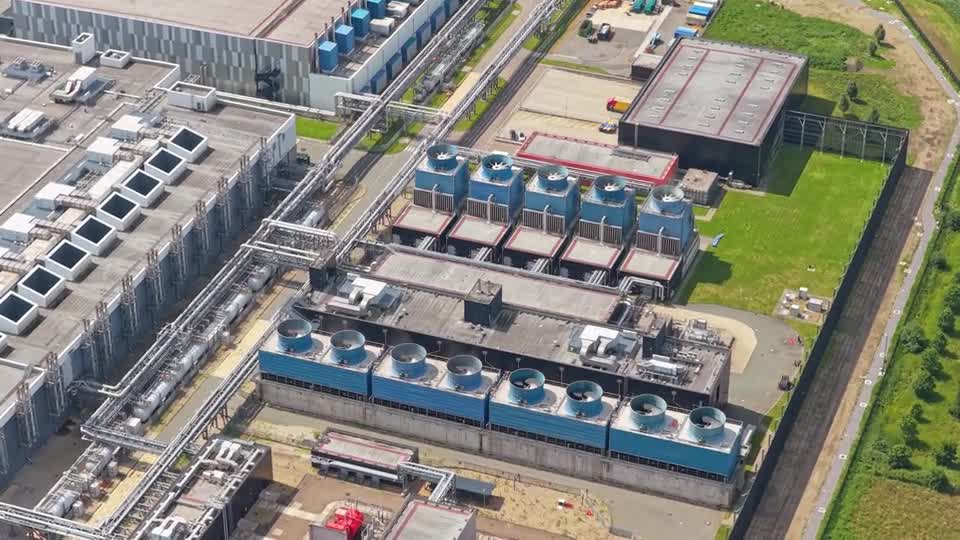
Most noise ordinances depend on A-weighted decibels (dBA), a standard measurement built to estimate sound we hear most easily, but that heavily discounts the contributions of low-pitched (low frequency) and tonal sound that are major components of data center noise. A data center’s cooling systems (e.g., chillers, cooling towers, HVAC fans), backup generators, and co-located power sources can produce continuous, low-pitched, tonal sound: exactly the range that the dBA discounts most.
Low-frequency sound travels far and goes through walls and windows.
Measurements based solely on the dBA may suggest that the noise coming from a data center is harmless, yet still cause sleep disruption and adversely affect the health of the surrounding community.
Read the neighbor’s guide →On the ground
Communities living with it right now

Granbury, Texas
Residents attribute symptoms from tinnitus to heart palpitations and sleeplessness to the constant roar of a Bitcoin mine's cooling fans. A group of neighbors sued in Hood County state court seeking a permanent injunction.
Read the case →
Sterling, Virginia
Neighbors describe "constant" noise from a data center powered by on-site gas turbines. An independent study commissioned by an environmental group estimated millions in annual health damages and several additional premature deaths per year.
Read the case →
Vineland, New Jersey
Three neighbors are suing over noise from the DataOne data center development, which they say disturbs sleep and is noticeable roughly a mile from the site.
Read the case →Ongoing
What's happening right now
A running record of lawsuits, reports, and coverage — with the latest headline shown instantly and refreshed in the background when new coverage is available.
Vineland, NJ neighbors sue over DataOne data center noise
Three residents say noise from the DataOne development disturbs sleep and is noticeable roughly a mile away. — The Guardian
National estimate: ~$25B a year in hidden health & environmental costs
An NBER working paper analyzing roughly 2,800 operating U.S. data centers puts a number on the annual hidden cost to public health and the environment. — Fortune / NBER
Sterling, VA residents describe “constant” data center noise
Neighbors near a gas-turbine-powered facility describe unrelenting noise, alongside new findings on its potential health impact. — NBC4 Washington
Siting is outpacing regulation, advocates say
Data center noise is regulated mostly at the local level; complaints often go nowhere even though the EPA retains legal authority to act. — Environmental and Energy Study Institute
Independent study: $53–99M a year in health damages from one Virginia facility
Modeling of a single facility's on-site power system estimates 3.4 to 6.5 additional premature deaths a year from its emissions. — EmPower Analytics Group / Piedmont Environmental Council
Granbury, TX residents sue Bitcoin mine over noise pollution
Neighbors seek a permanent injunction, alleging the mine's cooling-fan noise amounts to a private nuisance. — Earthjustice
Photo essay: life among Northern Virginia’s data centers
Facilities sited among cemeteries, ballfields, and homes — with noise the photographer says is hard to ignore. — The Washington Post
Inside the ‘nightmare’ health crisis of a Texas Bitcoin town
More than 40 residents near a Granbury, Texas mine attribute symptoms — tinnitus, hypertension, migraines — to its constant noise. — TIME
Research & coverage
Search the evidence
3 featured resources
Inside the ‘Nightmare’ Health Crisis of a Texas Bitcoin Town
Residents near a Granbury, Texas Bitcoin mine describe health concerns they attribute to constant industrial noise.
Read source →Communities Are Raising Noise Pollution Concerns About Data Centers
An overview of resident complaints involving cooling systems, generators, fans, and gaps in local noise regulation.
Read source →Air Quality, Health, and Economic Impacts of the Vantage Data Center Facility
Independent analysis of a Virginia facility’s on-site power system and associated health and economic impacts.
Read source →No results match your search. Try a different term or clear your filters.
Get involved
Noise near a data center in your community?
Quiet Communities' Quiet Industry program works with residents, researchers, and policymakers confronting round-the-clock industrial noise.