
Neighbors Data center home / For neighbors / If noise is already affecting you
PATHWAY FROM PROBLEM TO SOLUTION:
If noise is already affecting you
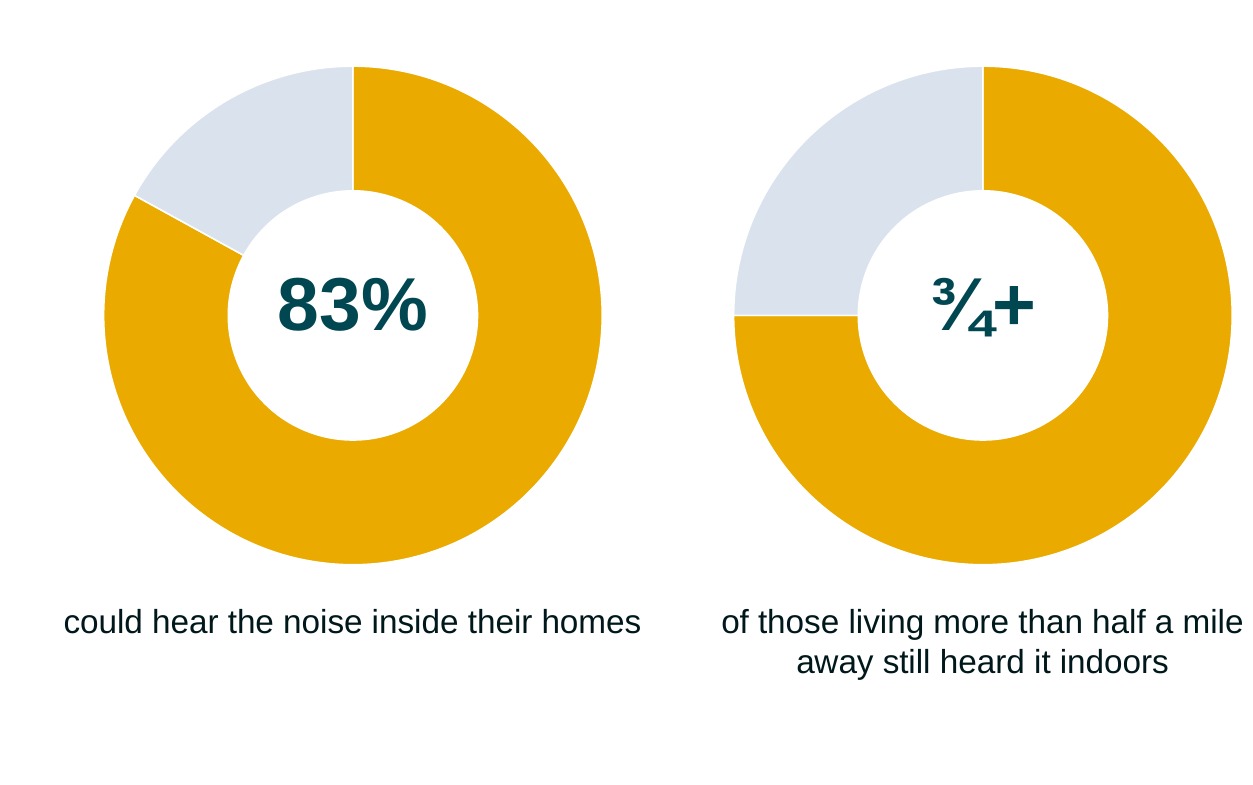
The level of noise from a facility can technically comply with local regulations yet still be clearly audible in your home and bedroom at night. This is because the metric used does not account for low-frequency components of the noise that travel long distances and penetrate walls and windows. A 2026 survey by Quiet Communities and Science for Georgia, based on a small number of self-selected respondents (103 people living near data centers or cryptocurrency mines in 11 states), suggests this experience is common: 83% said they could hear the noise inside their homes, and more than three-quarters of those living more than half a mile from a facility still heard it indoors. If you’d like to do something about it, a few things are worth considering:


What you can do
could hear the noise inside their homes
of those living more than half a mile away still heard it indoors
- Keep a noise log — date, time, weather, indoor or outdoor, dBA and dBC levels, and what it sounded like — and, along with that, a log to note the effects the noise is having on you and other household members, including animals – on activities, health, well-being, etc. Individually, these are impressions; over time they show a pattern.
- Measure the C-weighted decibel level (dBC) and the A-weighted decibel (dBA) levels using a noise meter or smartphone app. A difference of roughly 10 decibels or more between the dBC and dBA can indicate whether low-frequency sound is part of the problem. A fuller explanation of what a smartphone app can and can’t establish is in Measuring and Assessing Data Center Noise.
- Compare notes with neighbors: a set of consistent logs from a neighborhood or several neighborhoods, describing the same sound at the same times, is harder to dismiss than a report from a single household.
- If the noise is affecting your mental or physical health, tell your doctor and ask that the impact and the noise source be entered into your medical record. This can be useful both for your care and, more broadly, to build an evidence base linking noise exposure to health.
- If raising the issue with the owner or operator of the facility, ask that they fix the noise at the source (for example, modifying ventilation equipment) under the advice of a professionally licensed consulting engineer, and let them know that solutions are available. Although sound barriers or walls may work well against higher-pitched sound, they are not effective in mitigating a data center’s low-frequency sound.
- If raising this issue with local officials, readings and logs like these tend to carry more weight than a general complaint about loudness.
What data center neighbors actually experience

This website is designed to be shared
Download, print, or send this page to a neighbor, a doctor, or a local official.