
Officials Data center home / For officials / The measurement tools already exist
Pathway from problem to solution:
The measurement tools already exist
Acoustical professionals are guided in how they measure low frequencies and tonal effects of sources such as data centers by the standards published by the American National Standards Institute (ANSI) and the Acoustical Society of America (ASA).
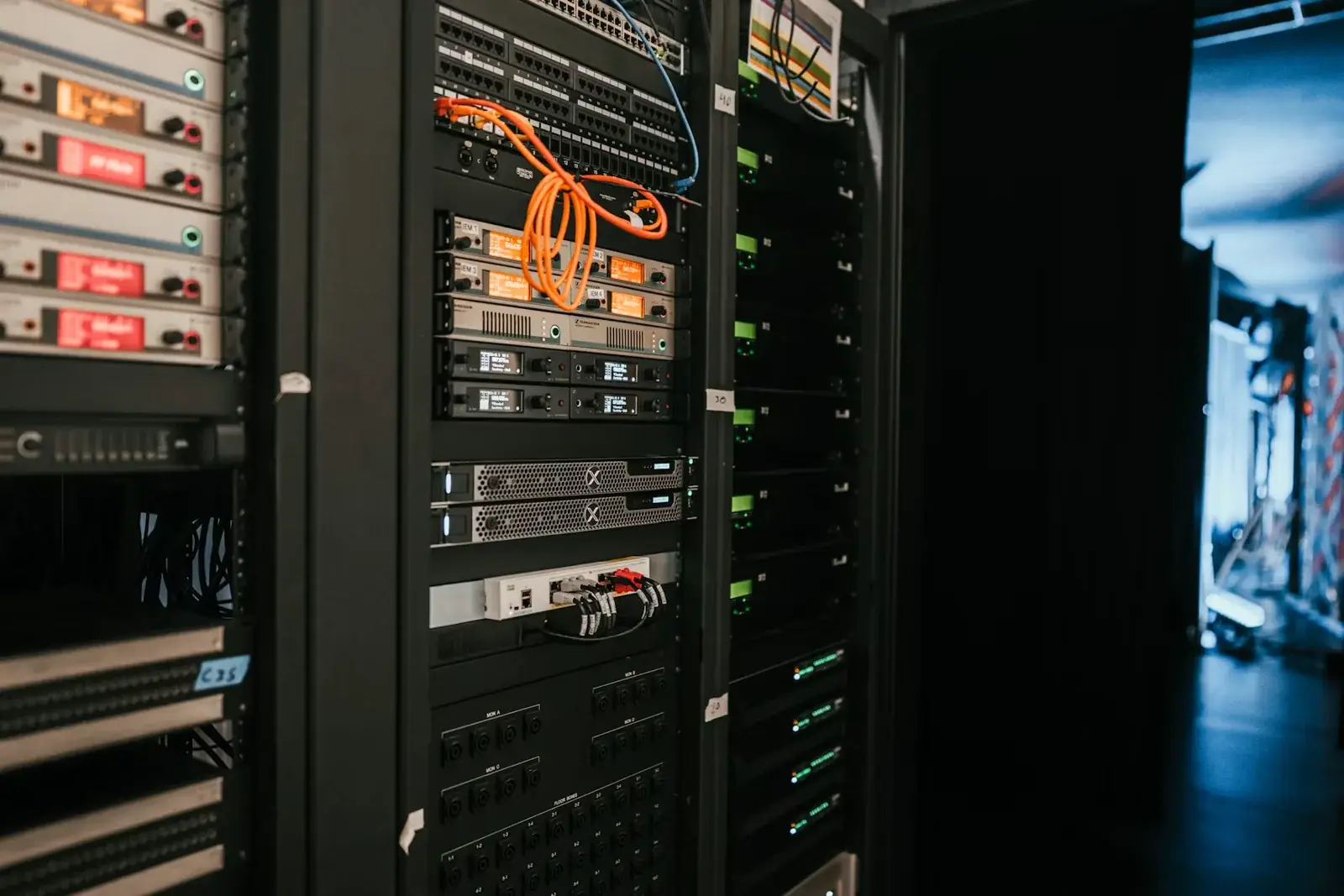

Tools for measuring data center noise
Any study that purports to assess data center noise based on the “A-weighted decibel” (dBA) is not following this guidance. Use of the dBA alone can mask noise emissions that may have serious impacts on the health of surrounding communities. For example, the dBA measurement discounts the level of noise generated within the 63 Hz octave band by 26 decibels, a common issue for data center noise.
The ANSI/ASA guidance calls for measurements using “C-weighted decibel” (dBC) metrics, which do not underweight low frequency components, as well as at a number of specific low frequencies (16, 31.5, and 63 Hz) in order to properly characterize the noise emitted. In addition, the guidance calls for a search for specific tones that stand out above the rest of the noise and that are a cause of hum and other disturbing sounds, such as whistling or whooshing.
Data centers should be required to conduct assessment studies in accordance with these standards. (More information regarding measurement is provided in Measuring and Assessing Data Center Noise).
When reviewing a study of noise from an existing or planned data center which includes information about the low frequency noise levels, what guideposts can one use to assess this information? ANSI has provided helpful guidance in the form of levels at which people experience these low frequencies. These noise levels indicate where people perceive the noise not so much as a sound but as a vibration, as well as where people clearly perceive the low-frequency sound. These ANSI thresholds are shown in the table here.
If a community’s goal is to ensure that residents do not experience any low-frequency noise from a data center (and the cost of compliance or other considerations is not a factor), then a community might want to set protective levels at or below the ANSI thresholds shown. Unfortunately, these thresholds do not address sleep disturbance. The research on sleep is incomplete, but one would expect such thresholds to require even stricter protective levels.
| Frequency level (Hz) | Perception of a rattle (vibration) | Clearly Perceptible |
|---|---|---|
| 16 | 65 dBz | 75 dBz |
| 31.5 | 65 dBz | 75 dBz |
| 63 | 70 dBz | 80 dBz |
Note: a dBz measurement is one without any filtering or weighting
There are three other “rules of thumb” in acoustics that may be helpful for decision makers:
01
When only dBA and dBC readings are available at a location, a difference of 10 dB or more between the two readings is a good indication that low-frequency sounds are present.
02
In the absence of the desired noise levels at the specific lower octave-band frequencies of 16, 31.5, and 63 (see table above), or of identification of the frequency at which a specific tone occurs, and when only a dBA reading is available, adding a 5 dBA penalty to the dBA reading will often account for a tone that is present.
03
If ambient levels are measured at one or more locations on the dBC scale, a level approximately 3 dB above the ambient level will be perceptible to people.
Assessing noise impacts

This website is designed to be shared
Download, print, or send this page to a neighbor, a doctor, or a local official.