
Neighbors Data center home / For neighbors / This is a real, measurable problem
Pathway from problem to solution:
This is a real, measurable problem
You may be told a facility meets the official noise limit, imposed by an ordinance or permit, yet you experience noise that is clearly audible inside your home despite closing your doors and windows.
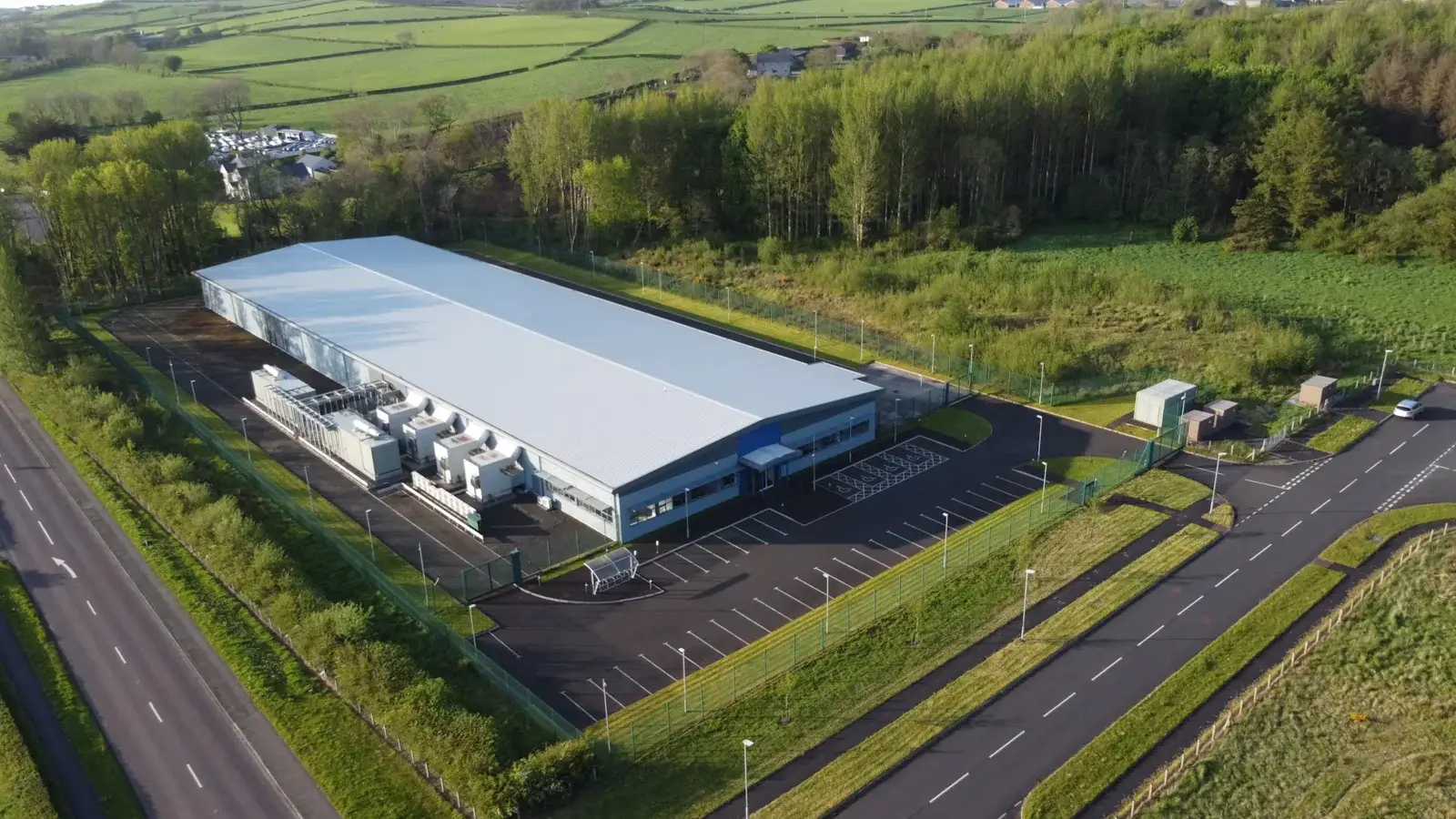

How data center noise escapes dBA limits
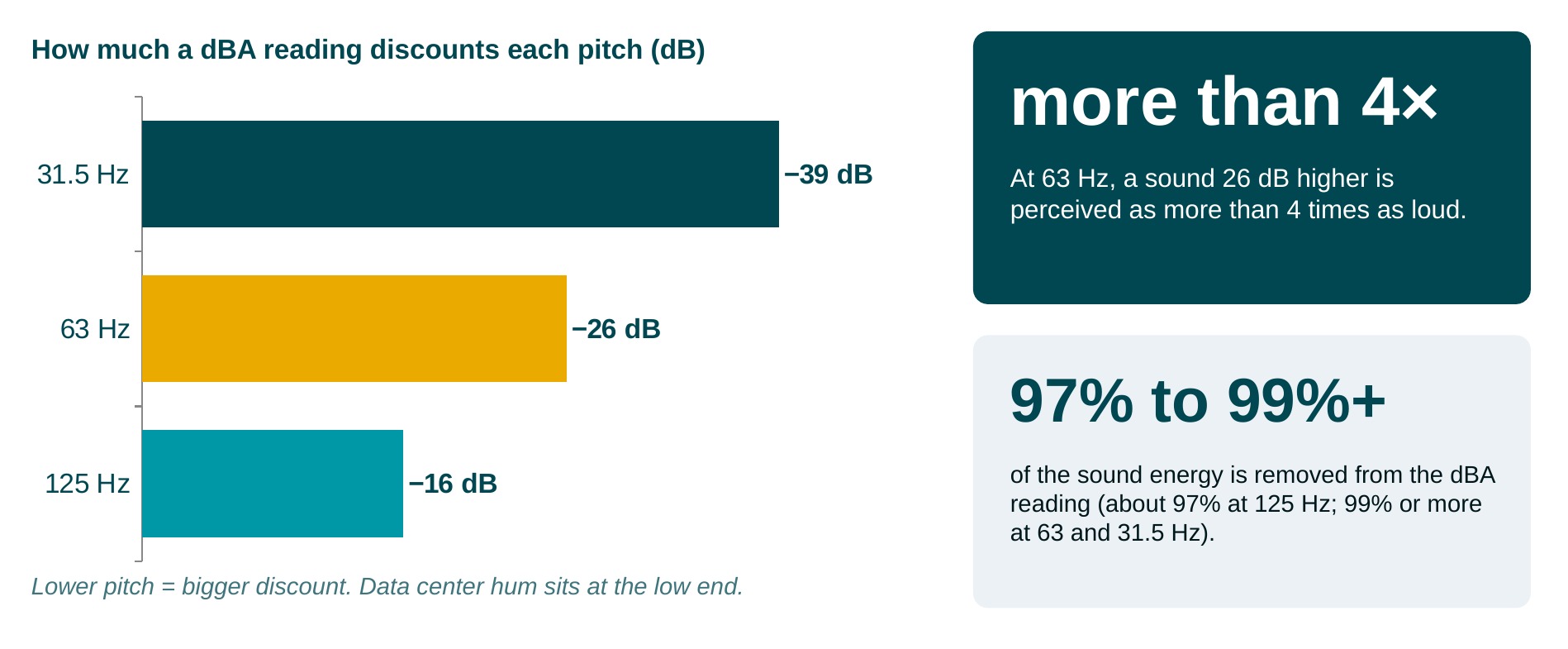
How noise is measured. Most noise ordinances depend on A-weighted decibels (dBA), a standard measurement built to estimate sound we hear most easily, but that heavily discounts the contributions of low-pitched (low frequency) and tonal sound that are major components of data center noise. A data center’s cooling systems (e.g., chillers, cooling towers, HVAC fans), backup generators, and co-located power sources can produce continuous, low-pitched, tonal sound: exactly the range that the dBA discounts most.
What low frequencies mean. For example, components of data center noise emitted at a frequency of 63 Hz is discounted by roughly 26 decibels. A sound that is 26 decibels higher is perceived as more than 4 times as loud.
Why proper assessment matters. Measurements based solely on the dBA may suggest that the noise coming from a data center is harmless, yet still cause sleep disruption and adversely affect the health of the surrounding community.
How much a dBA reading discounts each pitch (dB)
Lower pitch = bigger discount. Data center hum sits at the low end.
The next page lays out what the current evidence shows about the health effects of this kind of noise.
Why decibels don’t tell the whole story

This website is designed to be shared
Download, print, or send this page to a neighbor, a doctor, or a local official.